
Pieces of Pain Sell
2025 was an extraordinary year for female artists. If time has gotten in the way of keeping track, here is some intel. Two female artists with origins from the Global South have hit major accomplishments: Frida Kahlo and Marlene Dumas.
At a Christie’s auction in May 2025, Marlene Dumas’s Miss January (1997) fetched an $11.5 million hammer price, a number well within the estimate. The 71-year-old South African painter, who resides in Amsterdam, has had staggering sales in the past. That said, the sale of Miss January has inscribed Dumas as the most expensive living female artist. Although she has not quite reached the household-name status of some of her top-selling peers, her art has circulated widely and remained stable over the years.
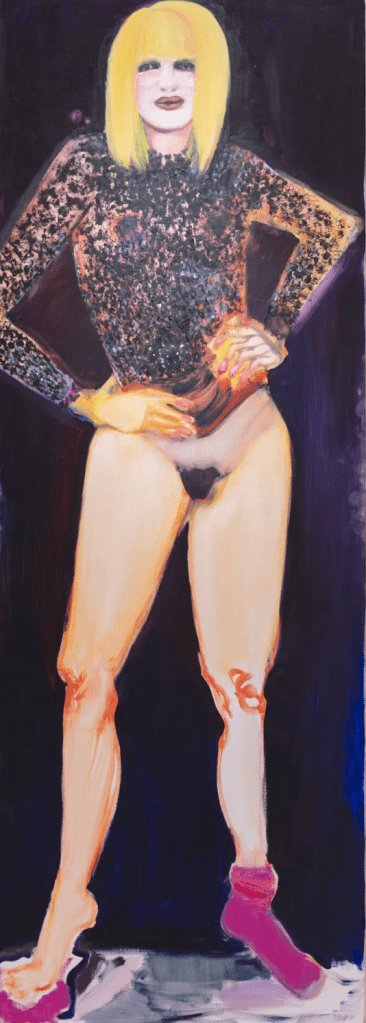
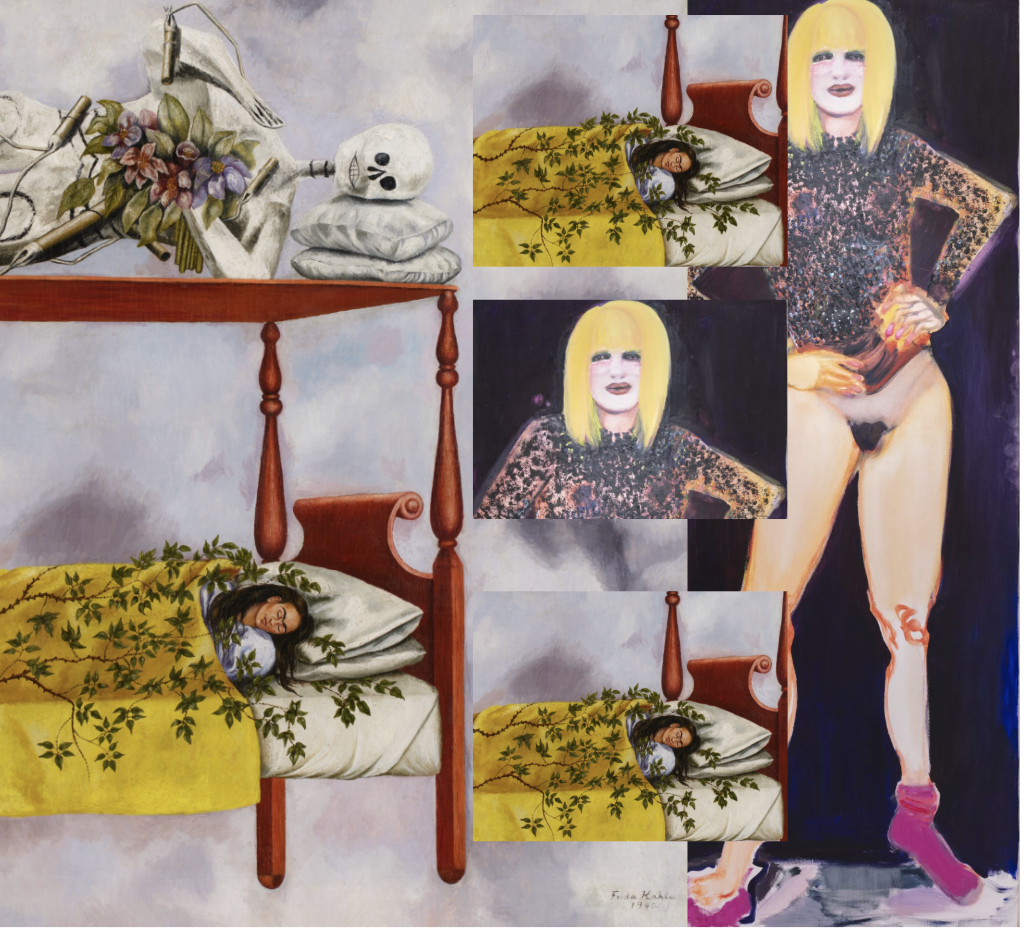
Miss January follows Dumas’s exploration of human states, creating a “gut-wrenching, haunting, and provocative” piece of female exposition. Drawing on photographic and pornographic sources, Dumas creates a semi-reflective self-portrait—although not entirely of the self, but of womanhood. The female nude has sustained interrogation as a mediated image throughout time. The nude, often passively positioned, is the object of the male gaze. Thus, the nude becomes the object of the art industry’s gaze. Women are typically depicted lying down with eyes diverted. Dumas confronts this obsession. Miss January is a statue of a woman. Her left hip is slightly lower than her right, relaxed. This contrapposto contrasts the posture of hands gripped firmly to her hips creating V-shaped arms. She is in a moment of movement, of confrontation. The pose asserts dominance over the space, over the eyes eventually bestowed upon her. Her lower half is completely nude with the one exception of a loosely placed pink sock, a reference to Olympia (1863) by Édouard Manet. The black background spotlights the female crafting the illusion front facing production light shinning on the elongated body, whilst the quick, liquid-like brushstrokes of color emphasize the emotional life and vulnerability of the subject. Face white, eyes heavy, bob blonde hair; Dumas is doing what she does best: breaking down institutional paradigms. She, a female artist, paints a female nude, taking agency over the female nude as subject. She places power in both the artist and the subject. The dark undertones subvert the heavy normalization of the passive, beautified female. Miss January, inspired by a female subject, is not of one woman but of the power of womanhood.
Five months later, in November, El Sueño (La Cama) (1940) by Frida Kahlo sold for $54.66 million at Sotheby’s. The total Exquisite Corpus: Surrealism evening auction brought in $98.1 million; El Sueño accounted for 55% of the auction. The reception of the painting is in large part due to the rarity of the piece. It was last seen at auction in 1980, when it sold for $51,000, meaning the new price is over 1,000 times its previous sale. Kahlo is considered one of the highest-priced female artists, remaining at the top of Sotheby’s reports on female artists year over year. Her work, having deep Mexican cultural significance, was declared an artistic monument in 1984 by the Mexican government. As a result, her work was barred from being exported or sold. At that time, her pieces were already in the hands of foreign art moguls. The re-emergence of Kahlo’s piece struck a chord with the art world and, after a swift four minutes of bidding, became one of the most expensive pieces of art by a female artist in the world publicly. There have been previous $50–100 million private sales of Kahlo’s work in the past.
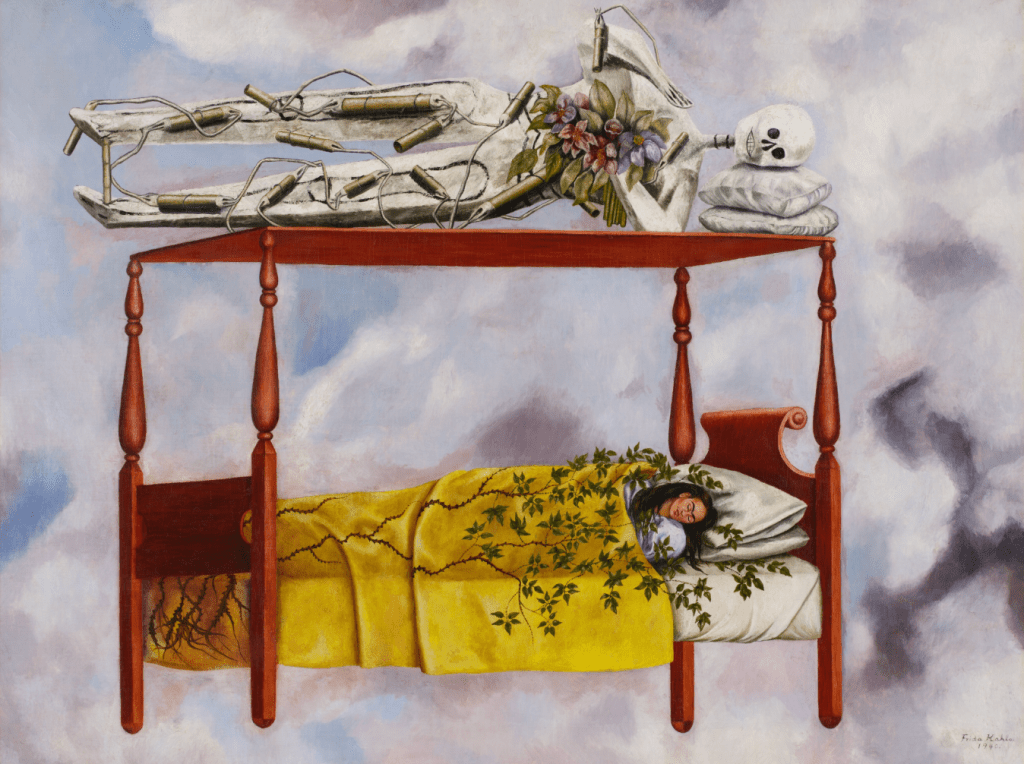
La Cama possesses the audience. It was painted during a turbulent time in Kahlo’s life. Her ex-lover Trotsky was assassinated the year before, and in the same year she was divorced from her husband Diego Rivera, a subject of many of her works. She was at a point of deteriorating health, in constant combat with death and sleep. The work is a microscope into her mental state at the time. Kahlo, the subject of many of her works, lies diminished in scale in bed, her body caressed by the leaves of a tree rooted at the end of her bed. On top of the bed lies a papier-mâché skeleton, an effigy known in Mexico as Judas. The skeleton is wrapped in firecrackers, which, according to historian Luis Martín Lozano, represent a passage between dimensions between reality and dream, between life and death. Here lies Kahlo, minimized by the dominance of her surroundings. Her eyes are closed, in a state of stasis. Though her mind is not asleep, it is in constant conflict. The bed floats in a background of soft clouds, with no grounding in reality. The roots of the plant suggest a foundation at her feet, whilst the leaves start to succumb her; nature reclaiming her. The dark message of the piece is hard to avoid. Kahlo was known for self-portraits, typically with more emphasis on her face and body. The subject here is her mental state. Death subsumes her.
Both non-Western artists canonized within the global blue contemporary scene are setting records for female artists. Is there something larger at play? Yes. Women’s representation at major auctions is up, with Gen-X being the leading demographic in bidding. Women are seeing an increasing compound annual growth rate of 4.3%, compared to an annual decline of 10% in male artists. Yet there are still barriers in the industry. A study in 2022 found that female artists make less than male artists, at 80 cents to the dollar. Male concentration remains a significant challenge. There is limited access for female artists, with eight galleries representing 30 of the top 50 female artists. There is hope for the future. The share of total sales by value of women artists has increased from 6.2% in 2018 to 13.8% in 2024, largely due to younger collectors driving demand. Younger generations are challenging the institutional frameworks of what is considered blue-chip art. Frida Kahlo and Marlene Dumas are noted for their ability to possess and enthrall the viewer. The art world is looking to be enthralled. This may account for the increased attention toward female surrealist artists. The art world has much work to do, but feats are being made. 2025 was a big year for female artists, and by extension, women. If this momentum continues, more records will be broken in 2026.
Sources:
https://news.artnet.com/art-world/who-is-marlene-dumas-highest-selling-living-woman-artist-2645224
https://www.artsy.net/article/artsy-editorial-rise-rise-ultra-vertical-painting
https://www.sothebys.com/en/docs/pdf/insight-report-women-artists.pdf?locale=en
 Art Origio
Leave a comment