

Located on the first floor of MoMA is the exhibition Less is Morbid curated by Arthur Jafa. The artist selected a diverse web of works from the MoMA collection, in addition to two works from outside of it. The works, varying in medium, size, and movement, weave together a grand narrative that extends beyond the frame. At first glance, I was intrigued by the diverse selection of paintings and sculptures decorating the tall white walls. There was a clear direction in the color of the exhibition. Emitting from the walls was a palette of red hues and shades of black, woven together to create a deep burgundy. These high-contrast colors invite inquiry into the meaning of the exhibition, particularly given Arthur Jafa’s African American identity, and the red tones’ connection to the Less Is Morbid theme. Do the red undertones suggest a question of violence, or rather an emphasis on violence and its exhibition?
Complementing the walls was a range of well-known artists and sculptors, from Jean-Michel Basquiat and Mark Rothko to David Hammons and Martin Puryear. Each piece felt intentionally placed. Some were more visible than others, raising questions of who were meant to be seen and how. On one side of the exhibition, the wall felt orderly, stacked with large canvases and protruding, glass-encased sculptures. In contrast, the opposite side felt more three-dimensional, featuring a canvas covered in tarp, a fishing net, and a V-shaped sculpture extending outward.
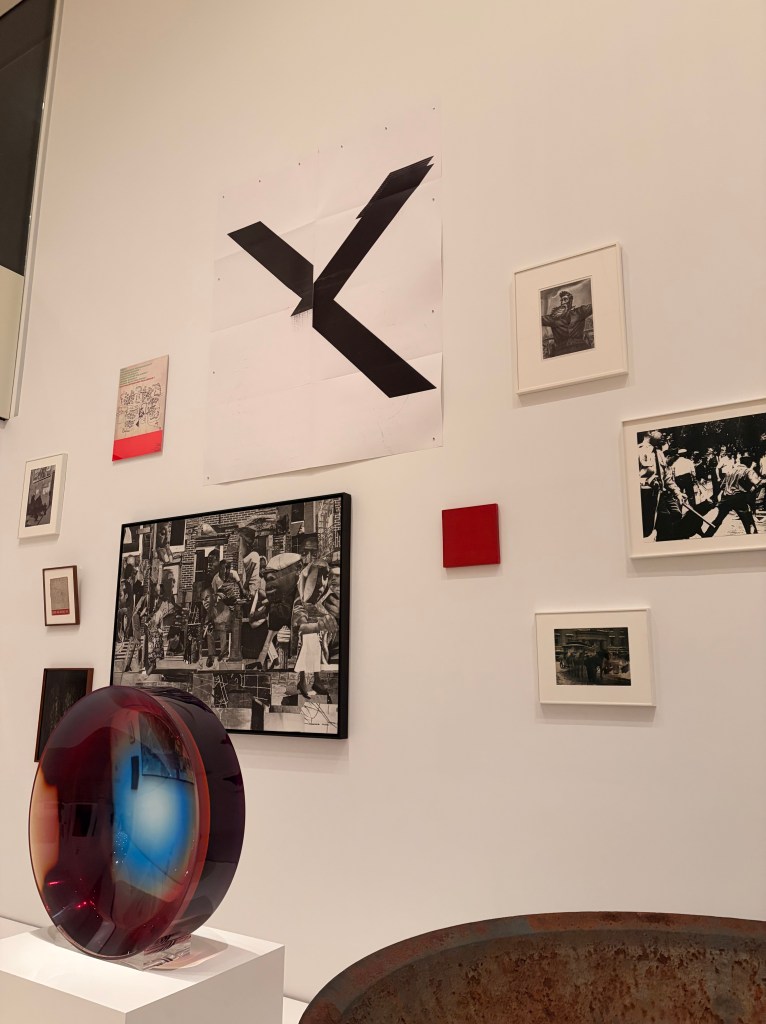


There was an overall sense of explosion. The art seemed to burst beyond its canvases, while sculptures reached into the surrounding space, gradually occupying more of the wooden exhibition floor.
The pieces beat in unison, creating a rhythmic heartbeat that expanded and contracted from the walls.
Although the room was brimming with art, it did not feel cluttered, but rather organized chaos. Arthur Jafa, who studied architecture at Howard University, is known for creating emotive works that cultivate complex narratives of Black beauty, alienation, isolation, music, and solidarity. The spatial composition of the exhibition highlights the role of space in curation by blending art to craft a lack of neutrality and calling towards often subverted narratives.
 Art Origio
Leave a comment